Leveraging Infrared Thermography For Cost Savings and Safety

In the world of commercial property management, proactive maintenance is key to preserving property value and minimizing costly repairs. Infrared thermography has emerged as a critical tool in this endeavor, offering a non-invasive method to detect issues that are invisible to the naked eye.

What is Infrared Thermography?

Infrared thermography is a technology that uses thermal imaging cameras to detect temperature variations on surfaces. These variations can indicate underlying problems such as electrical malfunctions and insulation deficiencies. By identifying these issues early, property managers can take corrective action before they escalate into serious, costly repairs.

Benefits of Infrared Thermography

  1. Early Detection of Problems: Infrared thermography allows for the early identification of issues like overheating electrical systems. Early detection means problems can be addressed before they cause significant damage.
  2. Cost Savings: By catching issues early, infrared thermography can save property owners thousands of dollars in potential repairs. Preventive maintenance is far less expensive than dealing with emergency repairs or system failures.
  3. Enhanced Energy Efficiency: Detecting areas of poor insulation or air leaks can help property managers improve the building’s energy efficiency. Addressing these issues can lead to lower energy costs and a reduced environmental footprint.
  4. Increased Safety: Infrared thermography can help identify safety hazards, such as overheating electrical components that could lead to fires. By addressing these hazards early, property managers can ensure a safer environment for occupants.
  5. Insurance Benefits: Regular use of infrared thermography can demonstrate a commitment to preventive maintenance, potentially leading to lower insurance premiums. Insurers may view properties that undergo regular thermal inspections as lower-risk investments.

Implementing Infrared Thermography in Your Maintenance Plan

Incorporating infrared thermography into your regular maintenance schedule is straightforward. Professional thermographers (like the team from Shaw Consulting Services) can conduct a thorough scan of your property, providing detailed reports that highlight areas of concern. These reports can then be used to prioritize maintenance tasks and allocate resources efficiently.

What’s Next?

Infrared thermography is more than just a diagnostic tool—it’s an investment in the longevity and safety of your property. By detecting issues early, improving energy efficiency, and potentially lowering insurance costs, this technology offers significant benefits to property managers.

Interested in learning more about how infrared thermography can benefit your property? Contact us today to schedule an assessment and ensure your building is in optimal condition. Visit our website at Shaw Consulting Services or call us at (470) 641-2562 to get started.

Other Recent Articles
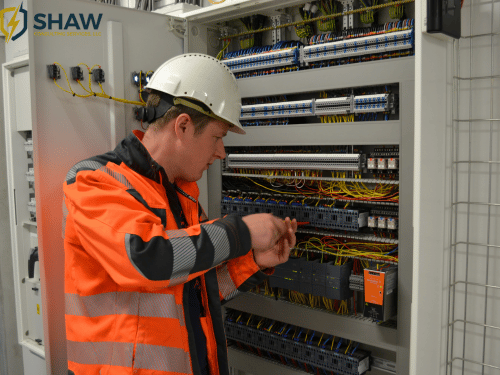
Electrical technician performing preventive maintenance.

The Facility Manager’s Guide to Electrical Maintenance Intervals: What to Do and When

Electrical equipment rarely fails on a convenient schedule. It fails when a connection has been loosening for months, when a breaker hasn't tripped correctly in years, or when load has crept up past what the original study accounted for. The good news is that almost...
Electrical technician inspecting an industrial control panel to improve electrical safety and reduce arc flash risks.

Why Your Insurance Carrier Is Asking About Arc Flash Studies (And What to Do About It)

A renewal questionnaire lands on your desk, and somewhere between the sprinkler inspection dates and the roof age, there's a new line item: Do you have a current arc flash study? For a lot of facility managers, that question comes out of nowhere. The equipment hasn't...

Can Your Electrical System Handle the Next Load? Why 30-Day Metering Matters Before Adding EV Chargers, Tenant Panels, or Major Equipment

Adding electrical load to an existing facility can feel like a straightforward decision at first. A tenant needs more power. A company wants to install EV chargers. A manufacturing facility is adding a new piece of equipment. A property owner is planning upgrades to...
Electrical engineering consultant performing diagnostic measurements with a multimeter during a site inspection

What Does an Electrical Engineering Consulting Scope of Work Actually Include?

An electrical engineering consulting scope of work defines the studies, deliverables, standards, timeline, assumptions, and exclusions for a project. Use this guide to compare proposals and identify gaps before work begins.

Thermographic Scanning for Arc Flash Risk Reduction

How Thermographic Scanning Supports Arc Flash Risk Reduction Strategies

Arc flash assessments and thermographic scanning are often treated as separate line items on a facility's safety budget: two independent services, scheduled independently, producing separate reports that live in separate binders. That separation is a missed...
Infrared Thermography for Seasonal Maintenance

Infrared Thermography for Seasonal Maintenance: Why Timing Matters

Infrared thermography is one of those tools that gets more powerful the smarter you are about when you use it. The technology itself, a thermal camera that reads heat signatures through surfaces without contact, is well understood. The part that most facilities get...
ROI of Power System Studies

The Hidden ROI of Power System Studies: Downtime Prevention and Cost Savings

Power system studies do more than support compliance—they help prevent costly downtime, reduce liability, and improve electrical reliability. This article explains how load flow, short circuit, arc flash, and coordination studies deliver measurable ROI for facilities in healthcare, manufacturing, data centers, and other critical environments.

NFPA 70E Training

Is Your NFPA 70E Training Program Audit-Ready?

Learn how to structure and document your NFPA 70E training program to pass regulatory audits, satisfy OSHA, and protect your organization from liability.

Thermographic Scanning

Thermographic Scanning vs. Visual Inspections: Why You Need Both for Electrical Safety

Thermographic scanning and visual inspections each play a critical role in identifying issues within electrical and building systems. While visual inspections rely on visible signs of wear or damage, thermographic scanning uses infrared technology to detect hidden heat patterns that indicate underlying problems. Understanding the strengths and limitations of both methods helps property owners and facility managers make more informed maintenance decisions and prevent costly failures.

Lock-Out-Tag-Out-LOTO

Top 5 Lock Out Tag Out Violations (and How to Avoid Them)

Lockout/Tagout isn't just another safety checkbox on your compliance list; it's the critical procedure that stands between your workers and potentially fatal energy releases during maintenance operations. Yet despite being one of OSHA's most frequently cited...