
An electrical engineering consultant analyzes your facility’s electrical systems, identifies risks and inefficiencies, performs technical studies, and delivers documentation that helps you make informed decisions about safety, compliance, and infrastructure planning. If you’ve never hired one before, the role can feel abstract. You know you need engineering expertise, but it’s not always clear what the day-to-day work looks like or what you’ll actually receive at the end.
This post walks through what an electrical engineering consulting engagement involves from start to finish, so you know what you’re paying for and what to expect at each stage.
The Role in Plain Terms
An electrical engineering consultant is not an electrician. They don’t install wires, pull conduit, or mount panels. Their work happens upstream of the physical construction or maintenance. They study your system, run calculations, model scenarios, interpret codes, and produce engineering deliverables that tell you (and your electricians, contractors, and safety team) what needs to happen and why.
Think of the relationship like an architect and a general contractor. The architect designs the building and produces the drawings. The contractor builds it. An electrical engineering consultant designs the electrical strategy and produces the analysis. Your electrical contractor or in-house team executes it.
What Services Fall Under Electrical Engineering Consulting
The scope varies by firm, but most electrical engineering consulting engagements fall into a few core service categories.
System assessment and evaluation. The consultant reviews your existing electrical infrastructure to determine its current condition, capacity, and code compliance. This is often the starting point for facilities that haven’t had a professional review of their electrical systems in several years, or those that have made incremental changes without updating their documentation.
Technical studies. This is the analytical core of the work. Depending on what your facility needs, the consultant may perform arc flash hazard analysis, short circuit analysis, protective device coordination studies, or load flow analysis. Each study uses your facility’s real-world data (equipment ratings, cable lengths, utility characteristics, protective device settings) to model how your system behaves under normal and fault conditions.
Code interpretation and compliance guidance. Electrical codes and safety standards (NEC, NFPA 70E, IEEE, OSHA) are dense, interrelated, and regularly updated. A consultant interprets how these standards apply to your specific facility and configuration, identifies gaps between your current state and what the code requires, and recommends corrective measures.
Design review and system planning. When you’re adding load, renovating, expanding, or upgrading equipment, a consultant reviews the proposed changes against your system’s capacity and identifies what modifications are needed to support the new configuration safely. This work happens before construction begins, which is when it’s cheapest and easiest to get things right.
Documentation and labeling. Engineering studies produce deliverables: updated single-line diagrams, arc flash labels, protective device setting recommendations, and written reports. These documents become the reference your team uses for years to come.

How the Process Works
If you’ve never been through an electrical engineering consulting engagement, here’s what the typical workflow looks like.
Phase 1: Scoping and data gathering. The engagement starts with a conversation about what you need. The consultant asks about your facility type, electrical system age, any known issues, and what triggered the need for outside expertise. From there, they define the scope: which studies, which buildings, which equipment. You’ll be asked to provide any existing documentation you have (single-line diagrams, panel schedules, utility bills, prior study reports). Even if your records are incomplete, that’s useful information.
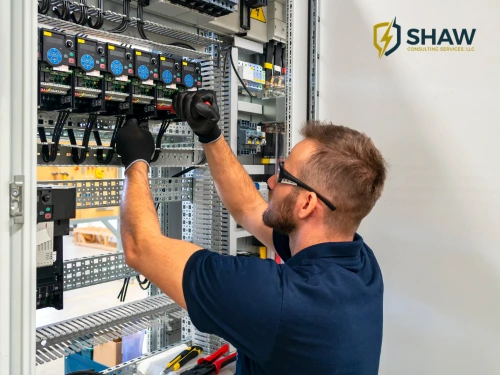
Phase 2: Field data collection. A field team visits your facility to collect the data that engineering models require. They’re recording nameplate information from equipment, measuring conductor sizes, documenting protective device settings, logging transformer ratings, and verifying that what exists in the field matches what’s on paper. This phase requires access to your electrical rooms, switchgear, panels, and distribution equipment. The consultant’s team will coordinate with your facility staff to schedule access during appropriate times, especially for areas that require escorts or have operational constraints.
For facilities in the Atlanta area, field visits are typically straightforward to schedule and complete within a few days depending on facility size. Regional familiarity with local utility configurations and common equipment vintages helps the field team work efficiently.
Phase 3: Engineering analysis. Back at the office, the consultant’s engineering team inputs the collected data into specialized software to build a model of your electrical system. They run the applicable studies (arc flash, short circuit, coordination, load flow) and analyze the results. This phase is where the technical expertise matters most. The software generates numbers, but interpreting those numbers, identifying which results are actionable, and understanding what they mean for your facility’s operations requires engineering judgment.
Phase 4: Deliverables and reporting. The consultant packages the results into deliverables you can use. This typically includes a written report summarizing findings and recommendations, updated system diagrams, equipment labels (for arc flash studies), and protective device setting recommendations (for coordination studies). The quality of these deliverables is where consultants differentiate themselves. A report that’s technically accurate but unreadable doesn’t help a facility manager make decisions.
Phase 5: Review and implementation support. A good consultant doesn’t just drop off a report and disappear. They schedule a findings review to walk your team through the results, explain what the high-priority items are, answer questions, and help you plan the implementation sequence. Some firms also provide support during the implementation phase, reviewing contractor work, verifying that protective device changes were made correctly, or assisting with label installation coordination.
What You Should Expect From a Good Consultant
Transparency about what’s included and what’s not. Clear timelines with defined milestones. Deliverables that are specific enough to act on. And communication throughout the process, not silence followed by a massive report three months later.
You should also expect the consultant to tell you what you don’t need. If your system doesn’t warrant a particular study, a trustworthy consultant will say so rather than padding the scope. That honesty is what separates a consulting partner from a vendor running through a checklist.
About Shaw Consulting Services
Shaw Consulting Services LLC is an Atlanta-based electrical engineering consulting firm that works with facility managers, safety directors, and building owners who need clear engineering analysis and actionable deliverables. Shaw handles the full consulting process from field data collection through engineering analysis, reporting, and implementation support. If your facility needs a professional evaluation of its electrical systems and you want to work with a firm that communicates clearly throughout the process, Shaw Consulting is a good fit. Contact Shaw Consulting to start the conversation.
Frequently Asked Questions
What is the difference between an electrical engineering consultant and an electrician?
An electrician installs, maintains, and repairs physical electrical components. An electrical engineering consultant performs technical analysis, system modeling, code interpretation, and engineering design. The consultant produces the studies and documentation. The electrician executes the physical work based on those findings.
When should a facility hire an electrical engineering consultant?
Common triggers include planning a renovation or expansion, adding significant electrical load, needing an arc flash study or power system study, responding to an OSHA citation or insurance requirement, or troubleshooting recurring electrical issues that your maintenance team can’t resolve.
How long does a typical electrical engineering consulting engagement take?
It depends on scope and facility size. A single study for a small facility might take a few weeks from field visit to final report. A multi-study engagement for a large campus could take several months. Your consultant should provide a timeline with milestones at the start of the project.
What should I have ready before the consultant arrives for a site visit?
Any existing single-line diagrams, panel schedules, prior engineering reports, utility billing data, and equipment documentation you have available. If your records are incomplete or outdated, let the consultant know upfront so they can plan additional field time.
How do I evaluate whether I’m getting a good report?
Look for specificity: named equipment, calculated values, referenced standards, and prioritized recommendations. A report that says “upgrade your system” is vague. A report that says “replace the 400A main breaker in MDP-1 with a faster-acting device to reduce incident energy from 18.3 cal/cm² to 6.1 cal/cm²” is actionable.