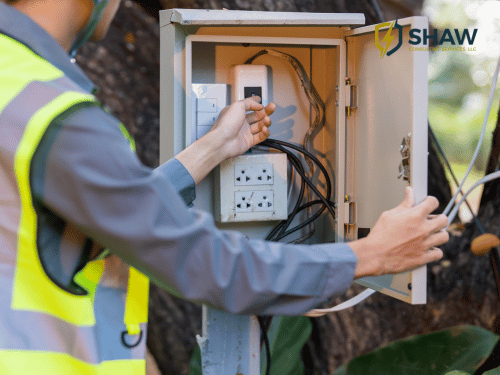
Debunking 3 Common Misconceptions About Arc Flash Hazard Assessments

Arc flash hazards are a serious concern for any facility with electrical systems, yet there are several misconceptions that can undermine workplace safety. Let’s explore these myths and highlight how Shaw Consulting Services can help you avoid these pitfalls.

Misconception 1: Arc Flash Assessments Are One-Time Requirements

Many believe that once an arc flash assessment is done, they’re set for years. In reality, electrical systems evolve, and regular assessments are crucial. Equipment upgrades, system modifications, and regulatory changes necessitate periodic evaluations to ensure ongoing safety.

Expert Insight: Shaw Consulting Services emphasizes the importance of regular updates, every 5 years according to NFPA 70E the system should be reviewed for accuracy. Out team ensures that your facility remains compliant with the latest safety standards and best practices.

Misconception 2: PPE Alone Guarantees Safety

Personal Protective Equipment (PPE) is essential but should be the last option when systems cannot be powered down. Relying solely on PPE without a comprehensive risk assessment can leave workers exposed to unanticipated hazards.

Expert Insight: Shaw Consulting Services conducts thorough risk assessments to identify potential hazards and recommends appropriate safety measures beyond just PPE. Our holistic approach ensures comprehensive protection for your workforce with proper labels on applicable equipment.

Misconception 3: Only Large Facilities Need Assessments

A common belief is that arc flash risk assessments are only necessary for large industrial facilities. However, all facilities with electrical systems should be evaluated.

Expert Insight: Shaw Consulting Services caters to businesses of all sizes. Our tailored assessments and safety solutions ensure that even smaller and medium-sized facilities can benefit from compliance with safety regulations. Do not let OSHA tell you

These are just a few of the common misconceptions surrounding Arc Flash Hazard Assessments. Overcoming these myths is crucial for maintaining a safe working environment. Partnering with Shaw Consulting Services ensures that your arc flash risk assessments are accurate, up-to-date, and tailored to your specific needs. By leveraging our expertise, you can implement effective safety measures and maintain compliance with industry standards.

Please don’t let misconceptions compromise your safety—contact our team today for expert guidance and support.

Other Recent Articles
Arc Flash Study Report

How to Read Your Arc Flash Study Report: A Plain-English Guide for Facility Managers

An arc flash study report tells you how much energy could be released at each point in your electrical system during a fault, what protective equipment workers need, and where your highest-risk areas are. The problem is that most of these reports are written by...
EV Charging Infrastructure

EV Charging Infrastructure and Electrical Safety: What Facilities Need to Know Before Installing

Adding EV chargers to a commercial or industrial facility introduces electrical safety risks that go well beyond the installation itself. Ground fault exposure increases in wet parking environments. Arc flash incident energy values can change at panels and switchgear...
Electrical technician performing preventive maintenance.

The Facility Manager’s Guide to Electrical Maintenance Intervals: What to Do and When

Electrical equipment rarely fails on a convenient schedule. It fails when a connection has been loosening for months, when a breaker hasn't tripped correctly in years, or when load has crept up past what the original study accounted for. The good news is that almost...
Electrical technician inspecting an industrial control panel to improve electrical safety and reduce arc flash risks.

Arc Flash Insurance Requirements: Why Carriers Ask and What to Do

Insurance carriers are increasingly asking facilities for current arc flash studies. Learn what documentation insurers want, what can happen if it’s missing, and how to prepare before your next policy renewal.

Can Your Electrical System Handle the Next Load? Why 30-Day Metering Matters Before Adding EV Chargers, Tenant Panels, or Major Equipment

Adding electrical load to an existing facility can feel like a straightforward decision at first. A tenant needs more power. A company wants to install EV chargers. A manufacturing facility is adding a new piece of equipment. A property owner is planning upgrades to...
Electrical engineering consultant performing diagnostic measurements with a multimeter during a site inspection

What Does an Electrical Engineering Consulting Scope of Work Actually Include?

An electrical engineering consulting scope of work defines the studies, deliverables, standards, timeline, assumptions, and exclusions for a project. Use this guide to compare proposals and identify gaps before work begins.

Thermographic Scanning for Arc Flash Risk Reduction

How Thermographic Scanning Supports Arc Flash Risk Reduction Strategies

Arc flash assessments and thermographic scanning are often treated as separate line items on a facility's safety budget: two independent services, scheduled independently, producing separate reports that live in separate binders. That separation is a missed...
Infrared Thermography for Seasonal Maintenance

Infrared Thermography for Seasonal Maintenance: Why Timing Matters

Infrared thermography is one of those tools that gets more powerful the smarter you are about when you use it. The technology itself, a thermal camera that reads heat signatures through surfaces without contact, is well understood. The part that most facilities get...
ROI of Power System Studies

The Hidden ROI of Power System Studies: Downtime Prevention and Cost Savings

Power system studies do more than support compliance—they help prevent costly downtime, reduce liability, and improve electrical reliability. This article explains how load flow, short circuit, arc flash, and coordination studies deliver measurable ROI for facilities in healthcare, manufacturing, data centers, and other critical environments.

NFPA 70E Training

Is Your NFPA 70E Training Program Audit-Ready?

Learn how to structure and document your NFPA 70E training program to pass regulatory audits, satisfy OSHA, and protect your organization from liability.