
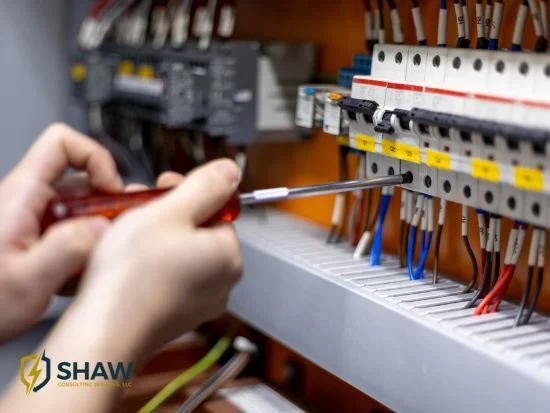
Electrical equipment rarely fails on a convenient schedule. It fails when a connection has been loosening for months, when a breaker hasn’t tripped correctly in years, or when load has crept up past what the original study accounted for. The good news is that almost every one of those failures gives off warning signs long before the lights go out. The trick is knowing when to look and what to look for.
This guide lays out electrical preventive maintenance the way a calendar would. Use it to build a rhythm into your facility’s electrical maintenance program so nothing important slips through the cracks.
Monthly and Quarterly: The Quick Visual Rounds
Some checks don’t require shutting anything down or bringing in a specialist. They just require a trained eye walking the floor on a regular basis.
Each month, walk through your electrical rooms and panel locations. Look for discoloration on panel covers, listen for buzzing or humming that wasn’t there before, and note any unusual warmth near enclosures. Confirm that electrical rooms stay clear of stored materials and that the three-foot working clearance in front of equipment is never blocked.
Quarterly, expand the round. Check that panel directories are accurate and legible, test emergency and exit lighting, and verify that ground fault protection on applicable circuits responds when tested. Document everything. A simple log of “what looked normal” becomes invaluable the day something doesn’t.
Annually: Thermography and Metering Review
Once a year, the program shifts from visual rounds to instrument-based inspection.
Thermographic scanning belongs at the top of the annual list. A thermographic scan finds loose connections, overloaded circuits, and failing components by reading the heat they give off, all while equipment stays energized and your operation keeps running. A connection running 40 degrees hotter than its neighbors is a problem you want to catch in a planned scan, not during an outage. Some facilities formalize this as a recurring infrared electrical inspection tied to their insurance or compliance requirements. Annual scans are the baseline. High-load or mission-critical facilities, including data centers held to Uptime Institute tier standards, often benefit from a semiannual cadence.
Annual electrical metering review pairs naturally with thermography. Pull your metering and power monitoring data and look at trends, not just snapshots. Has demand crept upward? Are certain panels running closer to capacity than they were a year ago? Rising load is the single most common reason a facility quietly outgrows its original electrical design, and metering is how you see it coming.
Every Three to Five Years: Breaker and Protective Device Testing
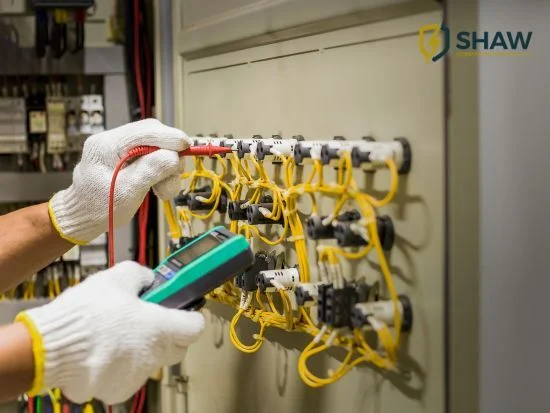
Circuit breakers are mechanical devices that sit idle for years and are then asked to operate flawlessly in a fraction of a second. That expectation only holds if they’re tested.
Low-voltage molded-case breakers, larger power breakers, and protective relays should be tested on a three-to-five-year interval, with the exact timing driven by equipment type, environment, and how critical the load is. Testing confirms that breakers trip within their designed time-current curves and that protective relays still coordinate the way the system was engineered to. A breaker that fails to clear a fault doesn’t just damage equipment. It dramatically raises the energy available in an arc flash event, which puts people at risk.
Dusty, humid, or high-cycle environments push you toward the shorter end of that interval. Clean, climate-controlled spaces can often stretch toward the longer end. When in doubt, test sooner.
Arc Flash Study Update Triggers
An arc flash assessment isn’t a one-and-done document. NFPA 70E calls for the study to be reviewed at least every five years, but the five-year mark is the floor, not the only trigger. Several changes should prompt an update well before that clock runs out:
- A new transformer, service upgrade, or change in utility supply
- Added or removed major loads, including new equipment or production lines
- Replaced breakers or protective devices with different ratings or settings
- Any modification that alters the available fault current or protective device coordination
If your facility has changed and the study hasn’t, your arc flash labels may be telling workers the wrong incident energy and the wrong PPE. That gap is exactly where NFPA 70E compliance and worker safety intersect. Tie your study review to your change-management process, not just the calendar, so any meaningful electrical modification flags a fresh look.
Building the Calendar Into Your Operation
The strongest programs assign owners and dates rather than leaving maintenance to “when we get to it.” Monthly rounds go to facility staff. Annual scans and metering review, multi-year breaker testing, and arc flash studies go to a qualified electrical partner. Each task gets a due date, a record, and a follow-up. Over time, that documentation becomes its own asset: proof of due diligence for insurers, OSHA, and your own leadership.
Where Shaw Consulting Services Fits In
Shaw Consulting Services helps Atlanta-area facility managers turn this kind of calendar into a working program. The team handles the specialized pieces that need credentialed expertise: infrared scanning, breaker and protective device testing, power system studies, and NFPA 70E training and certification that keeps your team current. As an electrical engineering consulting firm, Shaw can also help you prioritize intervals based on your equipment, your load, and your actual risk, whether you’re building a maintenance schedule from scratch or refining one you already have.
Ready to put a real maintenance calendar in place? Contact the Shaw Consulting team to talk through what your facility needs and when.
Frequently Asked Questions
How often should electrical preventive maintenance be performed?
It varies by task. Visual inspections run monthly or quarterly, thermography and metering review are typically annual, and breaker testing falls on a three-to-five-year cycle. Critical facilities often tighten these intervals.
How often does an arc flash study need to be updated?
NFPA 70E requires review at least every five years, but you should update sooner any time you change your service, add major loads, or swap protective devices, since those changes affect available fault current.
What is electrical thermography, and why does it matter?
Infrared thermography uses thermal imaging to detect heat from loose or overloaded connections while equipment stays energized. It catches developing faults before they cause failures or fires.
Can facility staff handle electrical maintenance in-house?
Staff can manage visual rounds and basic checks. Thermography, breaker testing, and arc flash studies require qualified personnel with specialized equipment and credentials.
What happens if breakers aren’t tested regularly?
Untested breakers may fail to trip correctly during a fault, which can damage equipment and significantly increase arc flash energy, putting workers at serious risk.