
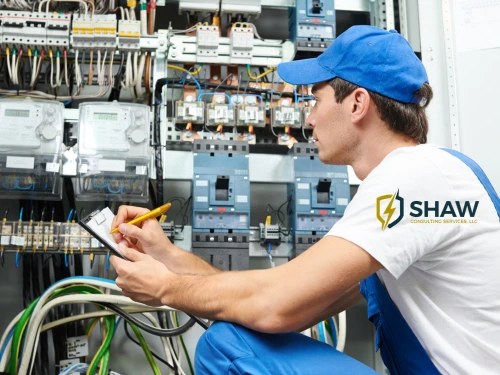
One of the most common questions safety directors ask is simple: “Who on my team actually needs NFPA 70E training?” The honest answer is that almost everyone exposed to electrical hazards needs some training. But the level of training depends entirely on what each person does.
Training everyone to the same level wastes budget. Training everyone at the awareness level leaves your electricians unprotected. This guide breaks down NFPA 70E training requirements by role so you can match training to real exposure.
The Core Distinction: Qualified vs. Unqualified Persons
NFPA 70E divides workers into two groups.
A qualified person has the skills and knowledge related to the construction and operation of specific electrical equipment, and has received safety training to identify and avoid the hazards involved.
An unqualified person is anyone who isn’t qualified for a given task. That doesn’t mean untrained. Unqualified workers still need training on the electrical safety practices that keep them out of harm’s way.
Here’s the detail many facilities miss: qualification is task-specific. An HVAC technician might be qualified to troubleshoot a rooftop unit’s control circuit but unqualified to work inside a 480V switchboard. Your training records should reflect that.
NFPA 70E Training Requirements by Role
Maintenance Electricians and Electrical Technicians
These are your qualified persons and need the most thorough training. NFPA 70E requires them to be trained to:
- Distinguish exposed energized parts from other parts of the equipment
- Determine the nominal voltage of exposed energized parts
- Understand approach boundaries and the distances that go with each voltage
- Use the decision-making process to plan the job, identify hazards, assess risk, and select controls
- Select and use PPE, insulated tools, and test instruments correctly
- Establish an electrically safe work condition, including lockout/tagout
Classroom training alone isn’t enough. A qualified person must also demonstrate the ability to perform the work safely, and that demonstration should be documented.
HVAC, Mechanical, and Multi-Craft Technicians
These workers often sit in the gray area. They may open control panels, reset breakers, or troubleshoot equipment that includes electrical components. Define exactly which tasks each person is qualified to perform, train them on those tasks and their specific hazards, and make sure they know where their qualification stops.
Operators, Custodial Staff, and General Employees
Most of your workforce falls here. These are unqualified persons who work near electrical equipment but don’t work on it. Their training should cover:
- Recognizing electrical hazards and warning labels
- Staying outside the limited approach boundary unless escorted by a qualified person
- Not opening panels, removing covers, or defeating interlocks
- What a lockout device or tag means, and why it must never be touched
- How to report damaged equipment or unsafe conditions
This training is shorter, but it still needs to be documented.
Supervisors and Safety Leaders
Supervisors don’t always need to be qualified electrical workers, but they do need to understand the program well enough to enforce it. NFPA 70E requires employers to verify through supervision or inspections, at least annually, that employees are following safety-related work practices. Supervisors also need to recognize when an energized work permit applies, when someone needs retraining, and when a job briefing is missing.
Facility Managers and Building Owners
You may never pick up a meter, but you are often responsible for the electrical safety program itself. Your training priorities are program-level: understanding risk assessments, keeping arc flash labels current, managing contractors, and making sure documentation holds up during an audit.
Emergency Responders
Employees who may need to respond to an electrical incident require training in safely releasing a victim from contact with energized parts. Those designated to provide first aid, CPR, or AED response need that training too, and NFPA 70E calls for these emergency response skills to be refreshed annually.
Contractors
Contract workers bring their own training, but the host employer still has responsibilities. NFPA 70E requires a documented meeting between host and contract employers, where the host shares known hazards and relevant safety information. Ask contractors for proof that their workers are qualified for the specific tasks they’ll perform at your facility.
How Often Is Retraining Required?
NFPA 70E requires retraining at intervals not exceeding three years. Retraining is also required sooner when:
- Supervision or annual inspections show an employee isn’t following safe work practices
- New equipment, technology, or procedures change how work is done
- An employee performs a task less often than once a year and needs a refresher
A Note on “NFPA 70E Certification”
Many people search for NFPA 70E certification, but NFPA itself doesn’t certify workers. What exists is training completion documentation from your training provider, combined with the employer’s documented determination that a worker is qualified. The employer, not the certificate, is ultimately responsible for confirming qualification. For a broader look at why this training matters, see our overview of NFPA 70E training and its role in electrical safety.
Training also works best when it’s tied to your actual equipment. Workers learn PPE selection far faster when they can read the real labels in your facility, which come from a current arc flash assessment.
How Shaw Consulting Services Helps
The biggest training mistake we see is one-size-fits-all: the same course for the electrician and the forklift operator. Shaw Consulting Services offers NFPA 70E training in both online and in-person formats, so you can give qualified workers in-depth instruction and give everyone else focused awareness training without pulling the whole team off the floor for a full day. We also help facilities document who is qualified for which tasks, so your records hold up when an auditor or insurer asks.
Frequently Asked Questions
Who needs NFPA 70E training?
Any employee exposed to electrical hazards. Qualified persons need detailed, task-specific training, while unqualified persons who work near electrical equipment need hazard awareness training.
How often is NFPA 70E training required?
At least every three years, and sooner when work practices aren’t followed, procedures or equipment change, or tasks are performed less than once a year.
Is NFPA 70E certification required by OSHA?
OSHA requires employers to train workers on electrical hazards and safe work practices. NFPA 70E is the widely recognized way to meet that requirement, but there is no official NFPA certification card for workers.
Can someone be qualified for some tasks and not others?
Yes. Qualification is task and equipment-specific, and training records should show exactly which tasks each worker is qualified to perform.
Does NFPA 70E training need to be documented?
Yes. Documentation should include the training content, the employee’s name, and dates, along with proof that qualified persons demonstrated the required skills.