
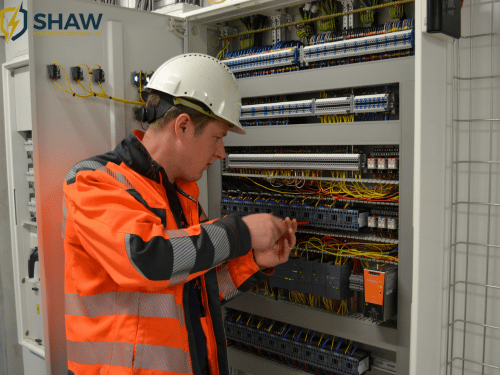
Plenty of facilities have electrical safety pieces scattered around: a lockout/tagout procedure from ten years ago, some arc flash labels, a training certificate or two. What they don’t have is a program, a documented system that ties those pieces together and keeps them current.
NFPA 70E requires employers to have a documented electrical safety program. If you’re starting from scratch, this nine-step roadmap gives you a practical order to build it in.
What Is an Electrical Safety Program?
An electrical safety program is a documented set of policies, procedures, and responsibilities that directs how your organization identifies electrical hazards, controls risk, and protects workers. Under NFPA 70E, it must address the principles, controls, and procedures for electrical work, a risk assessment process, job briefings, incident investigation, and regular auditing.
Think of it as the operating manual for everything electrical in your facility.
Step 1: Assign Ownership and Write the Policy
Programs without an owner stall. Name a person or committee responsible for the program, with management backing and a budget. Then write a short policy statement that makes the commitment clear: de-energizing is the default, safety takes priority over schedule, and everyone has the authority to stop unsafe work.
Step 2: Inventory Your Equipment and Update Drawings
You can’t protect people from hazards you haven’t identified. Build an inventory of your electrical equipment, including switchgear, panels, transformers, disconnects, and motor control centers. Update your single-line diagram to reflect the system as it exists today. Outdated drawings undermine every step that follows.
Step 3: Assess the Risks
Two assessments are required. The shock risk assessment establishes voltage exposure, approach boundaries, and protective measures. The arc flash risk assessment establishes incident energy, arc flash boundaries, and PPE requirements at each piece of equipment. A professional arc flash assessment gives you accurate values and compliant labels, which become the foundation for your procedures and PPE selection.
Step 4: Write Your Core Procedures
Your program needs clear, written procedures for:
- Establishing an electrically safe work condition, including lockout/tagout
- Energized work, including when it’s justified and how the energized electrical work permit is completed
- Job briefings before each job, covering hazards, procedures, and PPE
- Approach boundaries and keeping unqualified persons out of restricted areas
Procedures should be specific to your equipment. A generic template copied from the internet rarely survives contact with the real shop floor.
Step 5: Define Qualified and Unqualified Persons, Then Train
NFPA 70E draws a sharp line between qualified persons, who are trained and able to work safely on specific equipment, and unqualified persons, who must stay out of harm’s way. Document who falls into each category and what tasks each person can perform.
Then train accordingly. Qualified workers need detailed training on hazards, procedures, and PPE. Unqualified workers who work near electrical equipment need awareness training. Retraining is required at least every three years, and sooner when procedures change, or someone isn’t following them.
Step 6: Build a PPE and Tools Program
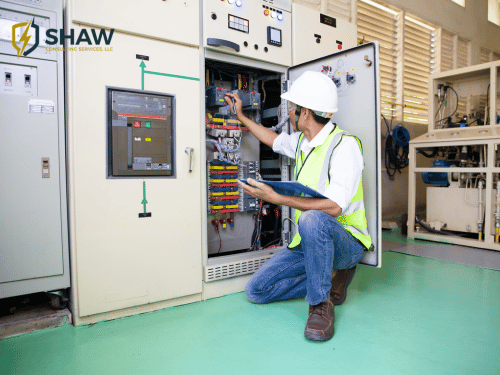
Select arc-rated clothing, gloves, face protection, and insulated tools based on your risk assessment results. Include care, inspection, and replacement rules. Rubber insulating gloves, for example, require periodic electrical testing.
Step 7: Connect Maintenance to Safety
Poorly maintained equipment can take longer to clear a fault, which increases arc flash incident energy. Your program should reference a maintenance plan, so protective devices perform the way your arc flash study assumes they will. Our comparison of NFPA 70B vs. NFPA 70E explains how the maintenance standard supports the safety standard.
Step 8: Plan for Incidents and Near Misses
Define how electrical incidents and near misses are reported, investigated, and turned into lessons. Near misses are free lessons, and a program that captures them prevents the injury that would have come next. Include emergency response planning and training for workers who may need to rescue a coworker from contact with energized parts.
Step 9: Audit and Improve
NFPA 70E requires the program itself to be audited at intervals not exceeding three years, and fieldwork to be audited at intervals not exceeding one year. Lockout/tagout procedures should be reviewed at least annually. Audits show whether written procedures match what actually happens in the field, and they keep the program from turning into shelf decoration.
Where to Start if You Feel Overwhelmed
Don’t try to finish all nine steps at once. Most facilities get the fastest safety return from Steps 2 and 3, because accurate drawings and a current risk assessment inform everything else. From there, focus on lockout/tagout procedures and qualified person training, then round out the rest. For quick improvements you can make this month, our electrical safety tips for facility managers are a good starting checklist.
How Shaw Consulting Services Helps
Building a program from zero usually means juggling several vendors: one for studies, another for training, another for procedures. Shaw Consulting Services can support every building block under one roof, from the arc flash risk assessment and updated drawings to NFPA 70E training and lockout/tagout program development. We help facilities build in phases that fit their budget and schedule, so each step strengthens the next instead of sitting in isolation.
Frequently Asked Questions
Is an electrical safety program required by law?
OSHA requires employers to protect workers from electrical hazards, and NFPA 70E, which OSHA widely references, requires a documented electrical safety program.
What should an electrical safety program include?
At minimum: a safety policy, hazard and risk assessment procedures, lockout/tagout and energized work procedures, job briefings, training requirements, PPE rules, incident investigation, and an auditing process.
How often should an electrical safety program be audited?
NFPA 70E requires a program audit at least every three years, with field work audits at least once a year.
Who needs electrical safety training?
Anyone exposed to electrical hazards. Qualified persons need detailed, task-specific training, and unqualified persons working near electrical equipment need hazard awareness training.
How long does it take to build an electrical safety program?
It varies by facility size and starting point. Many facilities establish the core elements within a few months, then refine the program through audits over time.