
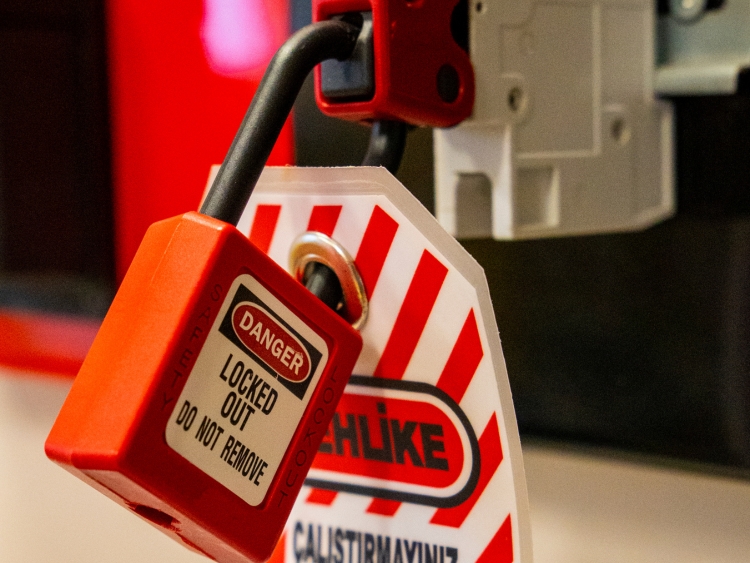
Lockout/Tagout isn’t just another safety checkbox on your compliance list; it’s the critical procedure that stands between your workers and potentially fatal energy releases during maintenance operations. Yet despite being one of OSHA’s most frequently cited standards, LOTO violations continue to occur at an alarming rate across facilities nationwide.
The consequences aren’t trivial. OSHA reports that failure to control hazardous energy accounts for nearly 10% of serious workplace accidents. Beyond the human cost, violations carry steep penalties; OSHA citations for LOTO deficiencies regularly exceed $15,000 per violation, and willful violations can reach over $150,000.
Here’s the reality: most facilities believe they have adequate LOTO programs in place. But when OSHA inspectors arrive or an incident occurs, gaps in implementation become painfully obvious. Let’s examine the five most common Lock Out Tag Out violations and, more importantly, what you can do to fix them before they put your workers at risk or result in costly citations.
Violation #1: Inadequate or Missing Machine-Specific Procedures
The single most common LOTO violation? Not having written equipment-specific procedures for every machine or system that requires lockout.
OSHA’s standard is clear: you need documented procedures for each piece of equipment unless it meets very specific criteria for exception. Yet facility managers often rely on generic procedures or expect workers to “figure it out” based on their training and experience.
Here’s why that doesn’t work. Modern industrial equipment has multiple energy sources: electrical, mechanical, hydraulic, pneumatic, thermal, and potential energy from springs or elevated components. A generic procedure can’t possibly account for all the isolation points, verification steps, and specific hazards unique to each machine.
How to fix it: Conduct a comprehensive equipment inventory, identifying every machine requiring LOTO. For each one, develop a written procedure that includes: all energy sources and their magnitudes, the specific steps to shut down the equipment, exact locations of isolation devices, methods to verify de-energization, and the sequence for restoring energy. Include photos or diagrams showing isolation points; visual aids dramatically reduce errors during actual lockout situations.
Don’t try to tackle everything at once if you have dozens or hundreds of machines. Prioritize high-risk equipment and systems that are serviced frequently, then systematically develop procedures for remaining equipment over time.
Violation #2: Failure to Properly Train Authorized and Affected Employees
Having great procedures means nothing if your workers don’t understand them or can’t execute them correctly.
OSHA requires three distinct categories of training: authorized employees who perform lockout, affected employees whose work is impacted by LOTO, and other employees who work in areas where LOTO might be used. Each group needs different training content, and many facilities fail to differentiate between them.
The violation often shows up during OSHA interviews when inspectors ask workers to explain LOTO procedures and discover they can’t identify energy sources, don’t know where isolation devices are located, or aren’t clear on their role in the process.
How to fix it: Develop role-specific training programs. Authorized employees need hands-on training with actual equipment, practicing the complete lockout procedure, including verification. Affected employees need to understand why the equipment is locked out and what their responsibilities are when encountering locked-out machinery. Other employees need a general awareness of LOTO principles.
Document everything: training dates, topics covered, trainer qualifications, and employee signatures. Conduct retraining whenever procedures change, when new equipment is introduced, or annually at a minimum. Better yet, implement a competency-based approach where workers must demonstrate proper LOTO execution before being authorized, not just sit through a presentation.
Violation #3: Inadequate Periodic Inspections
OSHA requires annual inspections of your LOTO program to verify procedures are adequate and that employees are following them correctly. This isn’t optional, and it’s not something you can skip because “everything seems fine.”
Many facilities either don’t conduct these inspections at all, don’t document them properly, or have unqualified personnel perform them. Others conduct inspections but fail to observe actual LOTO applications; they just review the written procedures without watching workers execute them.
How to fix it: Schedule annual inspections for each LOTO procedure and put them on your calendar as non-negotiable events. The inspection must be performed by an authorized employee other than the one using the procedure being inspected; no self-inspections allowed.
During the inspection, observe an authorized employee actually performing the lockout procedure, including energy isolation and verification. Review the written procedure against the equipment’s current configuration to ensure it’s still accurate. Correct any deficiencies immediately and document the inspection with specifics: date, equipment covered, employees involved, deficiencies found, and corrective actions taken.
Here’s a practical tip that helps facilities in the Atlanta area: incorporate LOTO inspections into your broader electrical safety program reviews. If you’re already conducting arc flash studies or electrical system assessments, the same shutdown procedures often overlap with LOTO requirements, making it efficient to review both simultaneously.
Violation #4: Insufficient Energy Control During Lockout
This violation occurs when workers lock out some, but not all, energy sources, or when they fail to properly verify that energy has been isolated before beginning work.
The classic scenario: an electrician locks out the main breaker to a machine but doesn’t address the pneumatic system that still has residual pressure. Or a maintenance tech isolates power but doesn’t verify zero energy by testing circuits before touching components.
These mistakes cause real injuries. Residual energy, stored energy in capacitors, pressure in hydraulic lines, or potential energy from elevated components has injured countless workers who thought they were protected.
How to fix it: Your equipment-specific procedures must identify ALL energy sources, not just the obvious ones. Consider electrical, mechanical, hydraulic, pneumatic, chemical, thermal, and potential energy from gravity.
Implement a verification step that’s actually performed, not just written in the procedure. For electrical systems, this means using properly rated test equipment to verify zero energy. For mechanical systems, it means attempting to operate the equipment after lockout to ensure it won’t start. For pressurized systems, it means bleeding pressure and monitoring gauges.
Train workers to identify and control stored or residual energy; blocking elevated components before working underneath them, discharging capacitors in electrical panels, bleeding hydraulic systems, and allowing hot components to cool before contact.
Violation #5: Poor Lock and Tag Management
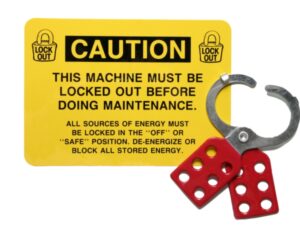
The physical locks and tags themselves create surprising compliance issues. Common problems include: using the wrong type of locks, having insufficient quantities available, sharing locks between workers, or using tags without locks (tags alone are never sufficient for LOTO).
OSHA has specific requirements for locks and tags: they must be durable enough to withstand the work environment, standardized in appearance, substantial enough to prevent accidental removal, and clearly identify the authorized employee who applied them.
How to fix it: Standardize on locks that meet OSHA requirements; they should be uniquely keyed so only the authorized employee who applied the lock can remove it. Provide each authorized employee with their own set of locks bearing their name or identification.
Establish a clear system for lock storage and availability. Nothing undermines a LOTO program faster than authorized employees who can’t find locks when they need them and start improvising with inadequate alternatives.
For group lockout situations, when multiple workers service the same equipment, implement a comprehensive group lockout procedure using lockboxes or hasps that accommodate multiple locks. Each worker applies their individual lock to the group lockout device and removes it only when their work is complete.
Create a process for lost lock situations. Workers occasionally lose keys or forget locks on equipment after completing work. Have a documented procedure for dealing with these situations that maintains safety while resolving the issue.
Building a Culture of LOTO Compliance
Beyond fixing these specific violations, sustainable LOTO compliance requires building organizational commitment to energy control. Management must allocate time for proper lockout execution; rushing maintenance during brief production windows encourages shortcuts. Supervisors need to reinforce correct procedures and intervene immediately when they observe non-compliance.
Consider implementing a near-miss reporting system specific to LOTO. When workers encounter situations where energy wasn’t properly controlled, but no injury occurred, capturing that information helps prevent future incidents and demonstrates areas where additional training or procedure revision is needed.
Regular safety meetings should include LOTO topics, especially when introducing new equipment or after any energy-related incident in your industry. Keeping energy control top-of-mind reinforces its importance and provides opportunities to address emerging questions or concerns.
Frequently Asked Questions
What’s the difference between lockout and tagout?
Lockout uses a physical lock to prevent equipment from being energized and must be used whenever possible. Tagout uses a warning tag and is only acceptable when lockout isn’t physically feasible. Tags alone never provide adequate protection; they’re informational devices, not physical barriers to energy release.
How many locks does each authorized employee need?
Each authorized employee should have enough locks to simultaneously lock out all the equipment they might work on during a shift. A good starting point is 3-6 locks per person, though workers who regularly service multiple machines simultaneously may need more.
Can we use the same LOTO procedure for identical machines?
Yes, if the machines are truly identical in energy sources, shutdown procedures, and isolation methods. However, document clearly which machines the procedure applies to, and verify each installation hasn’t been modified in ways that would change the lockout requirements.
What if we need to temporarily restore energy during LOTO for testing?
There’s a specific OSHA procedure for temporary re-energization during servicing. It requires removing tools and employees from the danger zone, removing lockout devices, re-energizing for testing, and then completing the full lockout procedure again before resuming work. Document this process in your procedures.
Are contractors required to follow our LOTO procedures?
Yes. When outside contractors work on your equipment, you must inform them of your LOTO procedures and ensure they comply. Conversely, when your employees work on contractor-controlled equipment, the contractor must inform you of their procedures. Document these exchanges and coordinate lockout activities to prevent miscommunication.
Get Expert Help with Your LOTO Program
Creating and maintaining a compliant Lock Out Tag Out program requires expertise in both OSHA regulations and the practical realities of electrical and mechanical systems. Many facilities struggle to develop comprehensive equipment-specific procedures, especially for complex industrial equipment with multiple energy sources.
Shaw Consulting Services helps Atlanta-area facilities build robust, compliant LOTO programs that protect workers and satisfy OSHA requirements. Our team of licensed electrical engineers and safety professionals brings decades of experience conducting energy control assessments, developing equipment-specific procedures, and training authorized employees on proper lockout execution.
We understand the unique challenges Georgia manufacturers and facility managers face when balancing safety compliance with operational demands. Whether you need a complete LOTO program development, annual inspections, gap assessments, or specialized training for your authorized employees, we deliver practical solutions that work in real-world industrial environments.
Don’t wait for an OSHA inspection or a serious incident to address LOTO deficiencies. Contact Shaw Consulting Services today to schedule a comprehensive Lock Out Tag Out program assessment and discover how we can help you protect your workers, maintain compliance, and build a culture of electrical safety throughout your facility.