
Arc Flash Assessment Services That Keep Your Facility Safe and Compliant

An arc flash incident can happen in milliseconds, but the consequences last a lifetime. Whether you’re managing a manufacturing plant, healthcare facility, or commercial building in the Atlanta area, understanding your electrical system’s arc flash hazards isn’t just about checking a compliance box. It’s about making sure your team goes home safe every day.
At Shaw Consulting Services, we conduct comprehensive arc flash assessments that give you the data, labels, and documentation you need to protect your people and meet regulatory requirements. No guesswork, no shortcuts, just thorough engineering analysis that stands up to scrutiny.
Why Arc Flash Assessments Are Critical for Electrical Safety
Here’s the reality: most electrical panels don’t come with the information workers need to safely perform maintenance or troubleshooting. Without an arc flash study, your maintenance team is essentially working blind, unsure of the actual hazards they’re facing or what protective equipment they need.
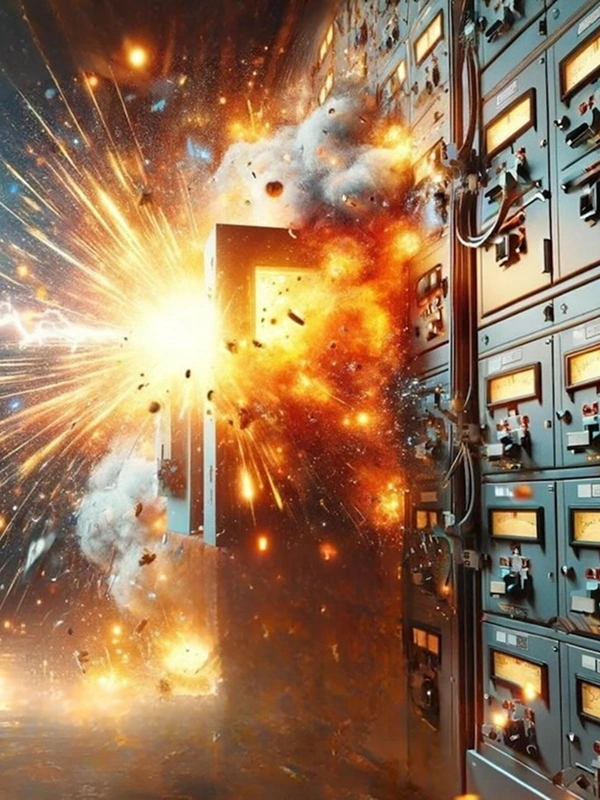
An arc flash is a sudden release of electrical energy during a fault or short circuit, creating an explosion with intense heat, light, and pressure waves capable of causing serious injuries or fatalities.
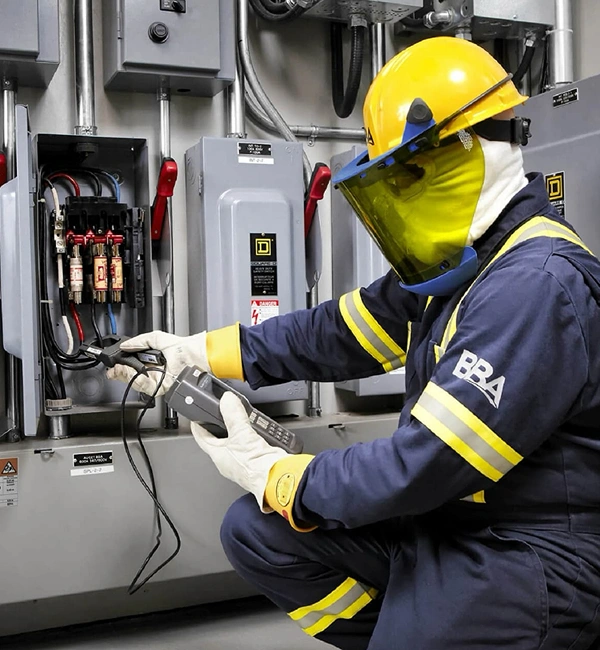
An arc flash assessment quantifies the thermal energy released during an electrical fault. This lets you establish proper working distances, select appropriate personal protective equipment (PPE), and implement engineering controls that reduce incident energy levels. You’re not just protecting against theoretical risks; you’re addressing the specific hazards present in your facility’s unique electrical configuration.
Beyond safety, there’s the business side. OSHA citations for arc flash violations carry steep penalties, and the liability exposure from an incident without proper assessment and labeling can be devastating. Insurance carriers increasingly expect documented arc flash studies as part of risk management programs.
NFPA 70E & OSHA Compliance Requirements
OSHA’s electrical safety standards reference NFPA 70E as the benchmark for workplace electrical safety. While OSHA doesn’t explicitly mandate arc flash studies in every regulation, its General Duty Clause requires employers to provide a workplace “free from recognized hazards.” Courts have consistently interpreted this to include arc flash hazards when industry standards like NFPA 70E clearly establish best practices.
NFPA 70E requires employers to assess arc flash hazards before employees perform tasks that could expose them to electrical hazards. This means conducting incident energy analysis and providing appropriate labels on electrical equipment. The standard also specifies when assessments must be updated, whenever modifications affect the electrical system or every five years, whichever comes first.
Our Arc Flash Assessment Process
We follow a systematic approach that ensures accuracy and usability:

Data Collection
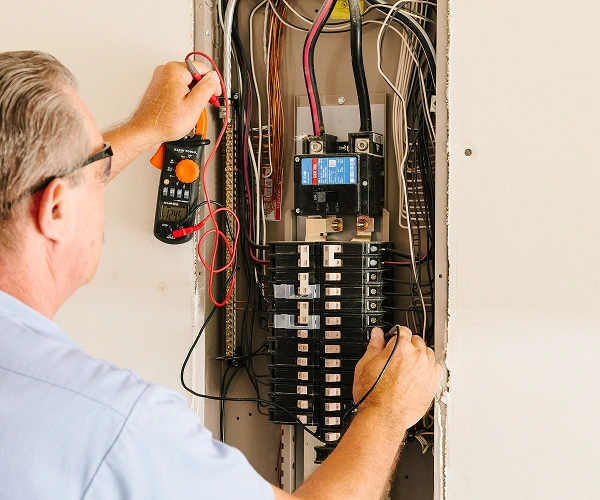
Starts with our field services team gathering information on breakers, panels, and electrical equipment throughout your facility, including single-line diagrams, equipment nameplate data, utility information, and protective device settings. We work with your team to understand system modifications and operational changes that might not be reflected in existing documentation.

Field Analysis
Involves physically verifying equipment, confirming protective device settings, and identifying discrepancies between drawings and actual installations. This step catches the details that desktop studies miss, like replaced breakers with different trip characteristics or undocumented system additions.

Incident Energy Calculations
Use specialized software to model fault currents and calculate available incident energy at each equipment location. Our engineering department analyzes multiple scenarios to account for different system configurations and determine worst-case exposure levels.
Incident Energy Calculations
Use specialized software to model fault currents and calculate available incident energy at each equipment location. Our engineering department analyzes multiple scenarios to account for different system configurations and determine worst-case exposure levels.

Labeling & Documentation
Provides arc flash labels for each piece of equipment, including incident energy levels, arc flash boundaries, required PPE categories, and limited and restricted approach boundaries. You’ll also receive a comprehensive report with calculation methodology, system modeling details, and recommendations for hazard reduction.
What’s Included in an Arc Flash Assessment
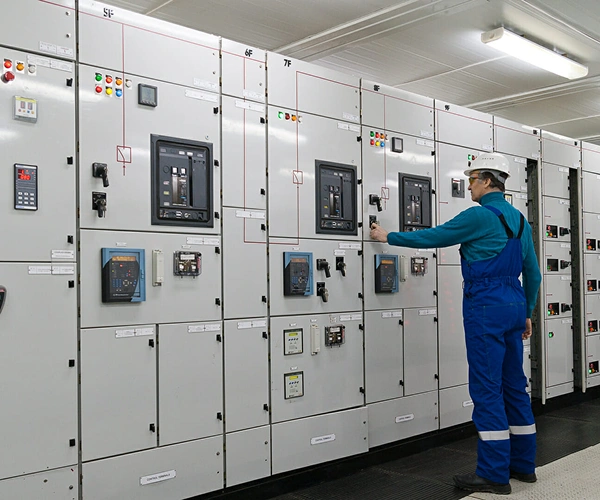
Your completed arc flash study includes detailed incident energy calculations for every piece of electrical equipment workers might need to access, from main switchgear down to motor control centers and panel boards. You’ll receive durable arc flash labels ready for installation, a complete report documenting our analysis and methodology, single-line diagram updates reflecting current system conditions, and specific recommendations for reducing incident energy levels through coordination improvements or engineering controls.
We also provide training coordination guidance so your safety team knows how to implement findings and maintain compliance going forward.
Who Needs an Arc Flash Assessment
If your facility has workers who perform electrical maintenance, troubleshooting, or testing, you need an arc flash assessment. This includes manufacturing plants with production equipment, healthcare facilities with critical power systems, commercial buildings with on-site maintenance teams, educational institutions with physical plant operations, and industrial facilities with high-voltage distribution.
Atlanta-area facilities with aging electrical infrastructure or those that have undergone expansions without updating safety documentation should prioritize assessment. The same applies if you’ve experienced nuisance tripping, coordination issues, or other signs that your protective devices might not be optimally configured.
How Often Arc Flash Studies Should Be Updated
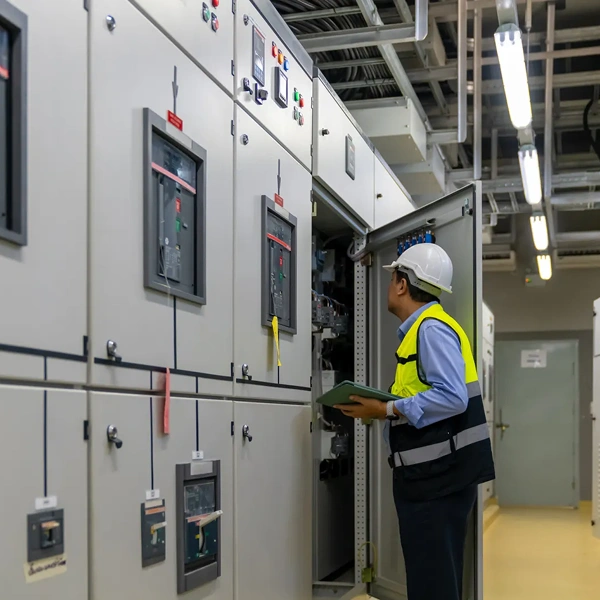
NFPA 70E requires updates every five years or whenever changes affect the electrical system. But here’s what that really means: if you add equipment, replace breakers, change utility service, or modify system configuration, you need to update your study. The five-year timeline is a backstop, not a postponement.
Think of it this way, your assessment is only accurate for the system it analyzed. Changes invalidate portions of your study, potentially leaving workers exposed to unquantified hazards.
FAQ’s
How long does an arc flash assessment take?
What information do I need to provide?
Do you need to shut down equipment?
What if our drawings are outdated?

Why Choose Shaw Consulting Services
We’re not just running calculations, we’re giving you actionable safety intelligence. Our assessments focus on practical implementation, not just regulatory checkbox compliance. We explain findings in plain language, provide clear recommendations, and make sure your team understands how to use the information effectively.
As an Atlanta-based firm, we understand the specific challenges facilities in our area face, from utility coordination issues to the practical realities of implementing safety programs in existing buildings.
Ready to protect your team and achieve compliance?
Schedule your arc flash assessment with Shaw Consulting Services today. Call us or fill out our contact form to discuss your facility’s specific needs.